 ATHENA FLOORS LLC
Most of a flooring job is flat. Stairs are not. They are the part of the house people touch every day, the part that shows every millimetre of a bad cut, and the part that decides whether the whole floor reads as finished or not.
These photographs are from one October project in Pinellas County. We have left them as they were taken on the job, with the dust and the protective sheeting still down, because that is what the work looks like.
What the staircase looked like underneath
Once the old covering came off, the treads underneath were bare construction pine — stamped, stained and never meant to be seen. This is normal. In most Florida homes built with carpeted stairs, nothing under the carpet was ever finished.
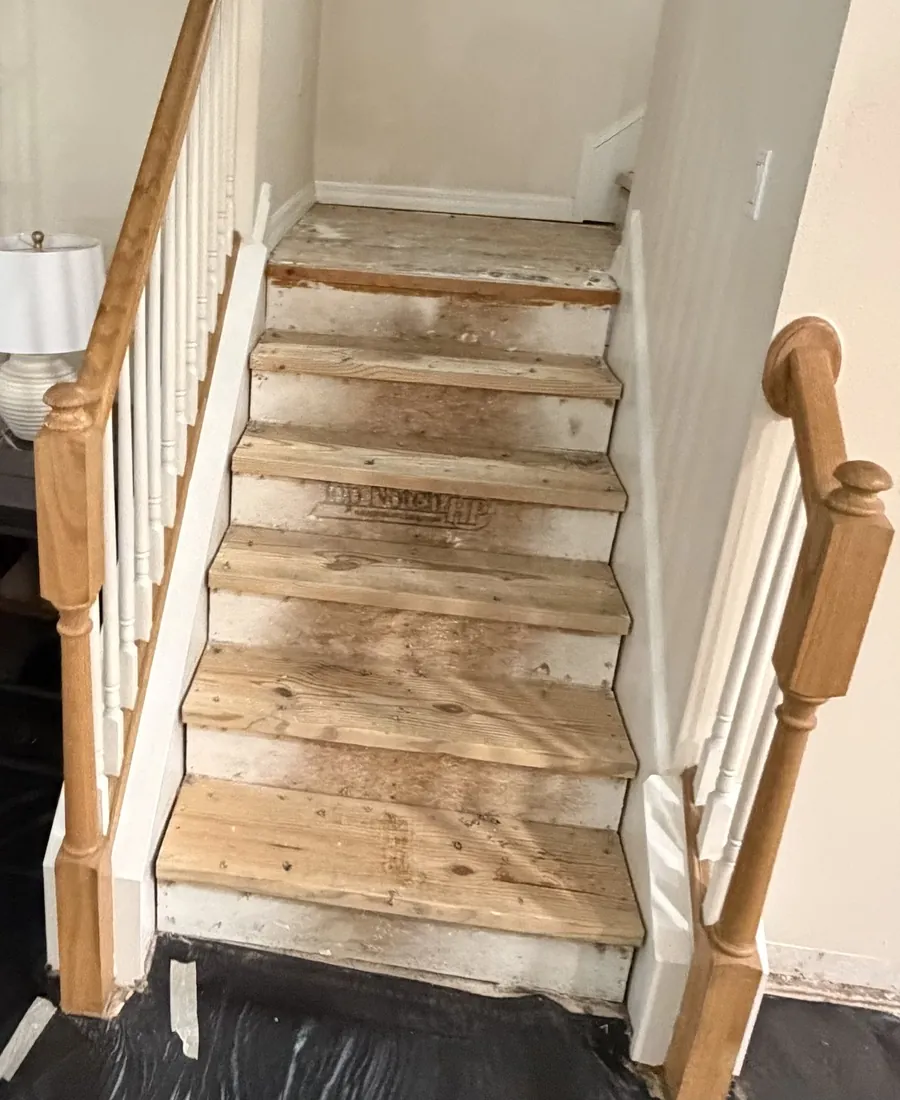
That is the real starting point of a stair job, and it is why stairs are priced separately from the rest of a floor. Every tread is measured on its own. Older houses settle, and almost no two steps in a staircase are exactly the same width.
Protecting the rest of the house first
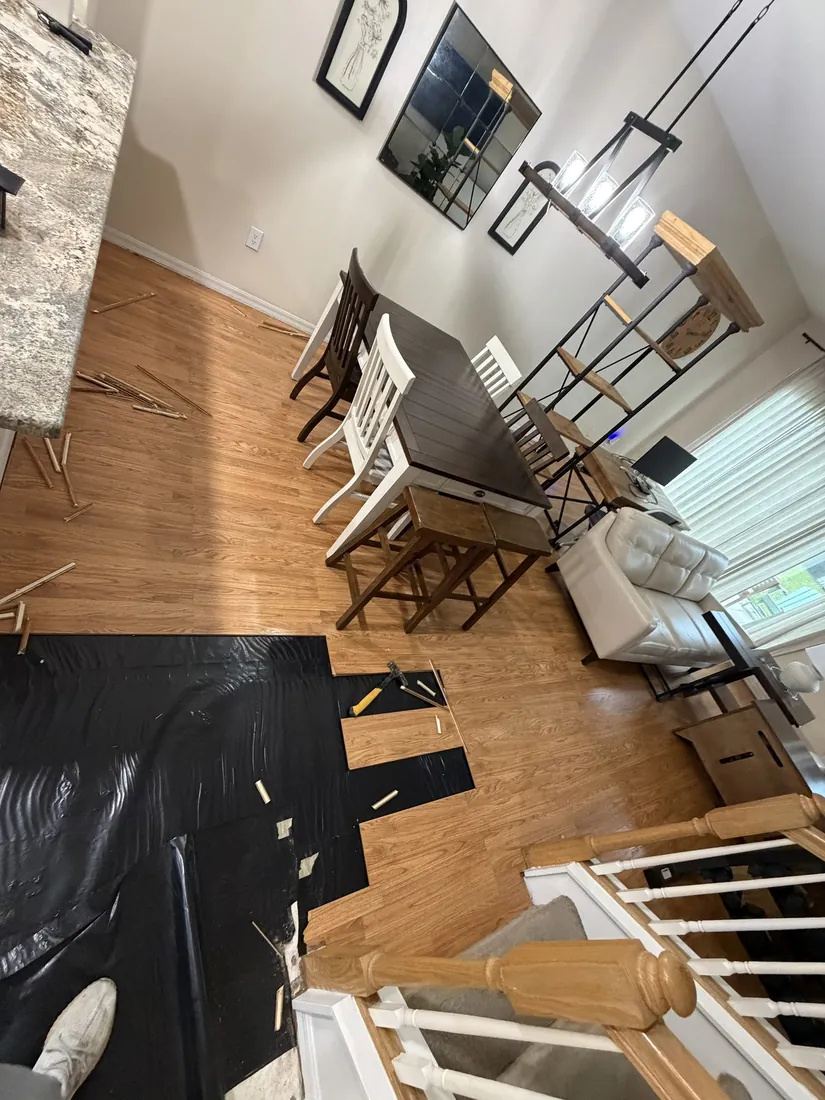
Before any cutting starts, the living space gets covered. Removing a stair covering makes fine dust that travels, and a flooring crew that does not plan for it leaves a house the owner then has to clean.
Why the nosing is the hard part
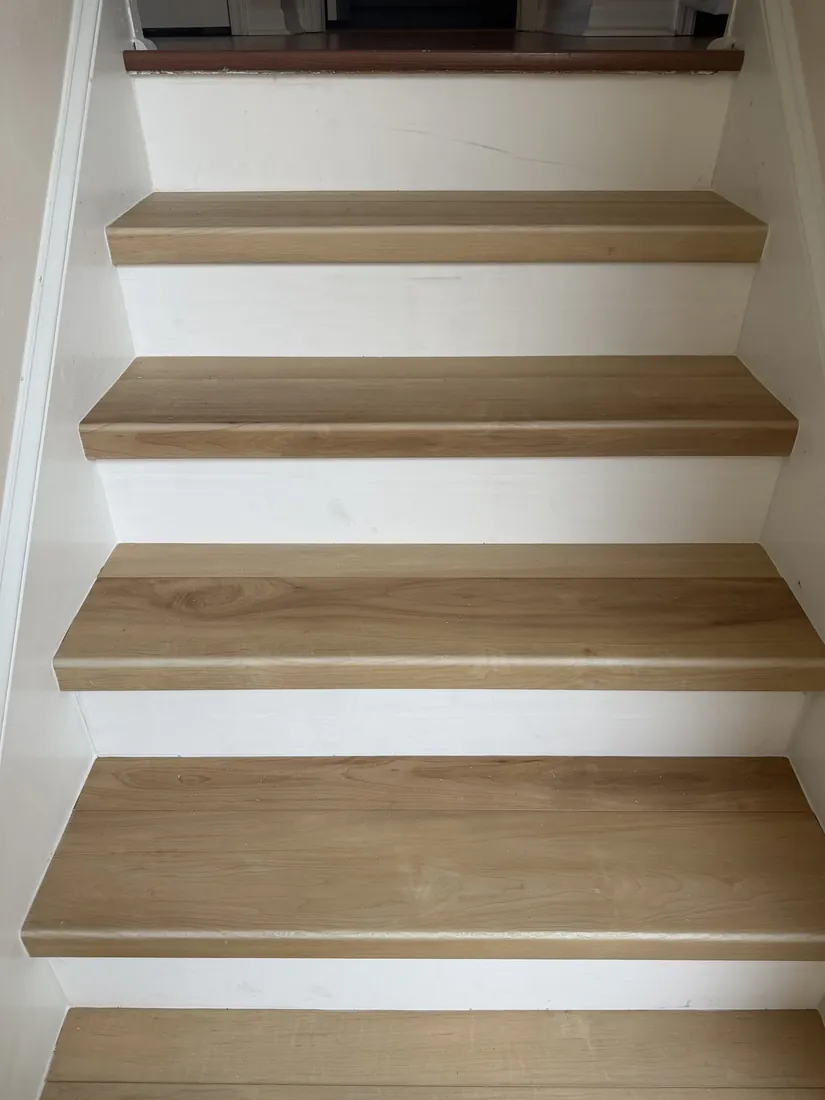
The front edge of each step — the nosing — is where stair work succeeds or fails. It takes the most wear, it is the most visible edge in the house, and on a vinyl plank staircase it has to be formed rather than simply cut. A tread that is flat and square at the back can still look wrong if the nosing is not right.
In the finished photograph above, the nosing wraps cleanly and the riser underneath is painted square to it. That junction is what the eye reads as “finished”.
Matching the stairs to the floor
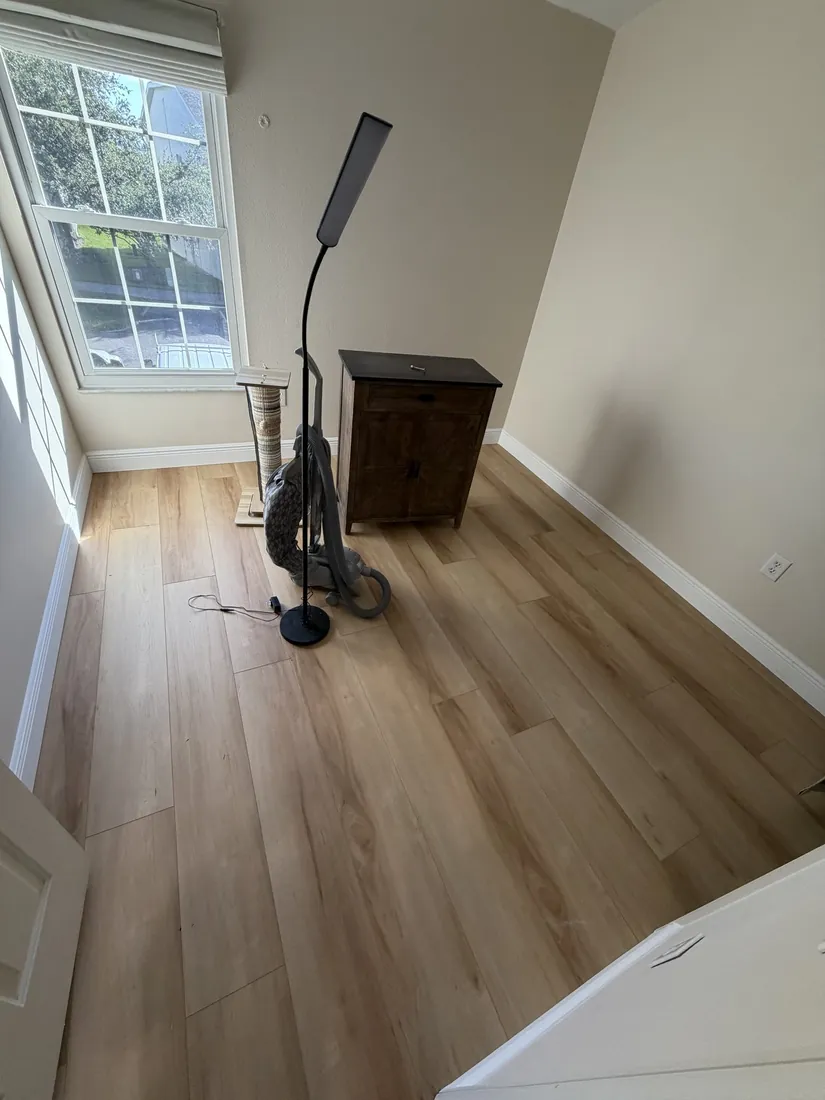
Stairs almost never sit on their own. They connect two floors, and both of them are usually being replaced in the same project. The planks on the treads come from the same batch as the floor they lead to, so the grain and tone carry through instead of stopping at the bottom step.
“They did fantastic work on my stairs — they are absolutely gorgeous. The team was efficient and effective, finishing the job on time.”
Debbie R. · public Google review of Athena Floors LLCWhat to ask before a stair job
- Are the stairs quoted separately? They should be. A per-square-foot floor price rarely covers stair work properly.
- Who paints or finishes the risers? Agree this before the job, not on the last day.
- What happens to the handrail and balusters? On most jobs they stay, and the work happens around them.
- How is the house protected? Ask what gets covered and who cleans up.
If you are planning a floor that includes stairs anywhere in Pinellas County, we can walk the staircase with you and price it honestly, step by step. See flooring installation for how we work, or luxury vinyl plank for the material used here.
Common questions
Can vinyl plank be installed on stairs?
Yes. The planks are cut to each tread and a matching nosing is formed over the front edge. It is slower than a flat floor because every step is measured on its own, which is why stairs are usually quoted separately.
Do the stairs have to match the rest of the floor?
They do not have to, but on most jobs they do. Using planks from the same batch keeps the tone and grain consistent from one floor to the next.
What is underneath carpeted stairs?
Usually bare construction pine that was never meant to be seen. That is normal and is not a problem, but it does mean the risers need finishing once the carpet is gone.
How disruptive is a stair installation?
The staircase is out of use while the work is done, and stripping the old covering creates dust, so the adjoining rooms get covered first. We agree the sequence with you before starting.